
Brain Entrainment
HOLISTIC THERAPY FOR THE HUMAN BRAIN
Your brain has a habit: when it hears a steady rhythm, it starts to copy it. Play it a beat, show it a pulse of light, or send it a gentle electromagnetic pulse — and its own electrical activity begins to sync up with that rhythm. This is called brain entrainment, and it's a natural, drug-free way to guide your mind into a specific state: relaxed, focused, meditative, or ready for sleep.
How Brain Entrainment Works:
The five brainwave states
Your brain runs at different speeds depending on what you're doing, and each speed has a name:
Delta (0.5–4 Hz) — deep, dreamless sleep
Theta (4–8 Hz) — deep relaxation, meditation, creativity
Alpha (8–12 Hz) — calm and alert, the "flow" state
Beta (12–30 Hz) — focus, active thinking, problem-solving
Gamma (30–100 Hz) — peak concentration, high-level processing
Brain entrainment works by giving your brain an external rhythm at exactly one of these frequencies —and your brain naturally falls into step with it.
The most fascinating part: binaural beats
Here is how your brain responds. Put a 200 Hz tone in one ear and a 205 Hz tone in the other. Neither tone actually contains a 5 Hz sound — but your brain does the math itself, inventing a phantom "beat" at exactly the difference between the two: 5 Hz, right in the theta range for deep relaxation. You're not hearing a real sound at all. Your brain is manufacturing the very frequency it then syncs to.
Other ways we create the same effect:
Isochronic tones — a single tone pulsing on and off at a set rhythm. No headphones needed;
your brain locks onto the beat either way.
Light pulses (photic entrainment) — flickering light at a chosen frequency, often paired with sound
and colour for a stronger effect.
PEMF — gentle electromagnetic pulses that encourage the same syncing effect through the body.
Why it matters:
Match the rhythm to alpha or theta, and you get stress relief, calm, and deeper meditation. Match it to beta or gamma, and you get sharper focus and mental clarity. Match it to delta, and you get more restorative sleep. Some people also use it for pain relief, since a calmer brain changes how pain is perceived.
Our system
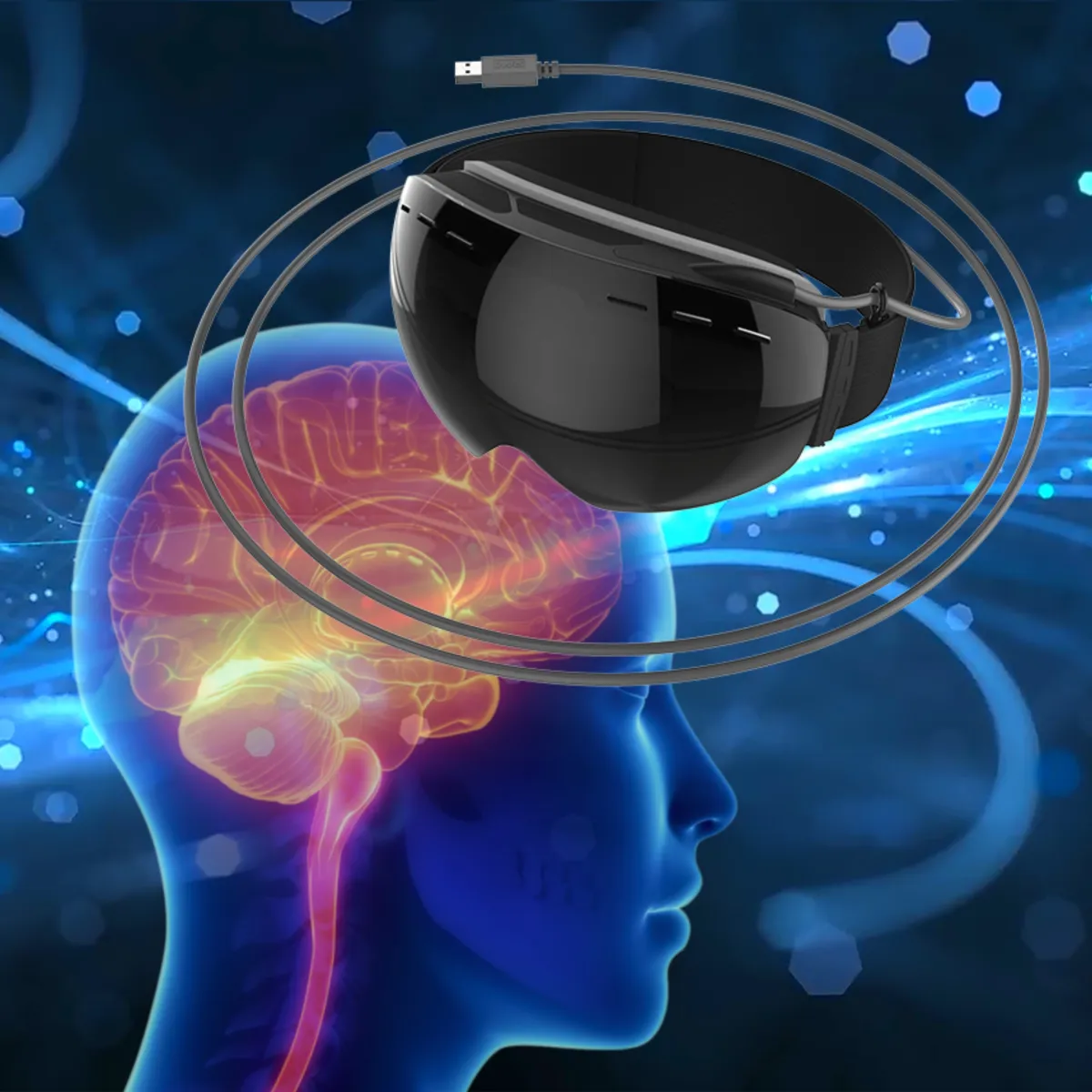
Our Brain Entrainment System layers three of these effects at once — light, color, and binaural beats — so you can experience all of them together in a single session.
Chromotherapy, the color layer, uses the visible light spectrum — the same reds, greens, and blues that make up every color you see. Each color carries its own wavelength, and different wavelengths affect the brain and body differently, working alongside the sound and light rhythms to help bring your whole system into balance.
With our 6 dimensional system, this results in your PEMF session becoming an entire experience for your Body + Mind.
Studies
Chromotherapy + Health Benefits
1. Stress Reduction and Relaxation
Blue is associated with calmness and tranquility. Exposure to blue light is thought to reduce stress levels, kill bacterial infections, lower blood pressure, and encourage relaxation. Example: Blue lighting in meditation spaces or spas can create a peaceful atmosphere and help reduce anxiety.
2. Enhanced Focus and Mental Clarity
Yellow is linked to intellectual stimulation, focus, and mental clarity. It is believed to invigorate the mind and encourage optimism. Example: Yellow light in workspaces or study areas may boost concentration and productivity.
3. Improved Circulation and Energy Levels
Red is energizing and associated with stimulation of circulation, vitality, and physical energy. It is thought to enhance blood flow and combat fatigue. Example: Using red light therapy in fitness centres or for individuals recovering from injuries may support muscle healing and improve physical stamina.
4. Support for Emotional Balance
Green represents harmony and balance, often associated with nature. It is believed to soothe emotions, reduce tension, and promote overall well-being. Example: Green lighting or decor in therapeutic environments can help individuals manage emotional imbalances or irritability.
5. Pain Relief and Muscle Relaxation
Indigo is thought to have analgesic properties, reducing pain and promoting deep muscle relaxation. It is also linked to intuitive and meditative states. Example: Indigo lighting in physical therapy rooms or massage settings may help relieve chronic pain and support relaxation.
6. Detoxification and Skin Health
Orange is associated with stimulation of metabolism, detoxification, and boosting energy. It is also linked to skin rejuvenation. Example: Some skincare clinics use orange light therapy to improve skin tone and texture, supporting detox processes.
7. Enhanced Sleep Quality
Purple or Violet light is calming and is believed to help regulate sleep cycles. It is associated with spiritual awareness and mental peace. Example: Purple-hued lighting in bedrooms or meditation spaces can encourage deeper, more restorative sleep.
8. Balancing the Endocrine System
Turquoise is believed to support immune function and balance the endocrine system. It is also calming and rejuvenating.Example: Turquoise light therapy may be used in holistic treatments to improve hormonal balance and immune system health. We reccommend turquoise before bed for the sleep program.
"Color is a power which directly influences the soul."
–
Wassily Kandinsky, Russian artist
and theorist
"Mere color, unspoiled by meaning, and unallied with definite form, can speak to the soul in a thousand different ways."
–
Oscar Wilde, Irish poet
and playwright
"Colors, like features, follow the changes of the emotions."
–
Pablo Picasso, Spanish painter
and sculptor
PEMF pura vida
Playa Avellanas
Guanacaste
Costa Rica


PEMF therapy contraindications: pregnancy, babies
under 2 weeks old, electronic implants, epilepsy
The iMRS Prime and Omnium1 wellness systems are not licensed or certified as a medical devices. The systems are not intended to diagnose, cure, treat, mitigate or prevent any particular disease. No sales partner of Swiss Bionic Solutions is allowed to make any specific health claim aside from the legally authorized intent of use.
© pemf pura vida, Costa Rica 2026
All Rights Reserved